Documentary Storytelling
Field Documentation in Africa: A Practical Guide for Communications Teams
A practical guide to field documentation in Africa, covering photography, video, human-interest stories, donor visits and development programmes.
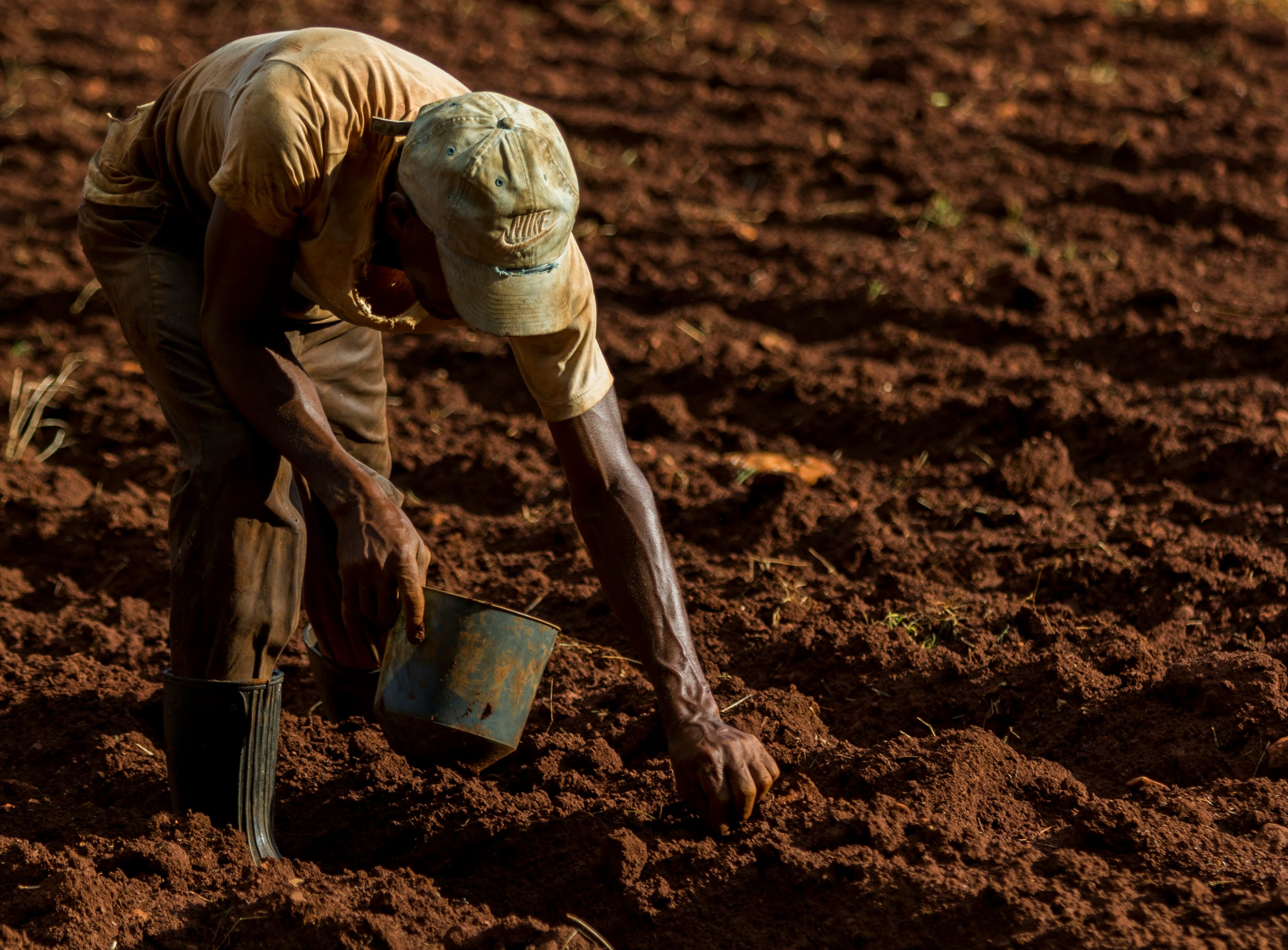
How to plan photography, video and human-interest storytelling for NGO, UN, donor and development programmes across Africa
Field Documentation | Photography | Video Production | Documentary Storytelling
A field visit can look simple on a communications plan. Identify a programme, travel with a photographer or videographer, interview a few people, capture activities and return with material for the website, donor report and social media.
Anyone who has actually done this work knows that it rarely unfolds so neatly.
The person identified for the story may not be available when the team arrives. A programme activity scheduled for 10 a.m. may have happened at 7 a.m. The strongest interview may be in a language nobody on the production team speaks. Mobile internet may disappear just when headquarters asks for photographs. A senior delegation may have only 40 minutes at a location that needs several hours to document properly. The communications officer may return with 3,000 photographs and still discover that nobody captured the one image needed for the report cover.
These are not unusual production problems. They are part of field communications.
Across Africa, development organizations are working at enormous scale. UNICEF reported that in 2025 alone it responded to 414 humanitarian emergencies in 101 countries, helped more than 34 million people gain access to safe water and supported 27.8 million out-of-school children with access to education; nearly half of those children were in sub-Saharan Africa.
Behind numbers like these are thousands of places where programmes are actually delivered and millions of people experiencing them. The communications challenge is to move between the two: to show enough evidence of scale for institutional audiences while documenting individual experiences well enough that people can understand what those numbers mean.
That is what good field documentation should do.
What should a field documentation team actually capture?
Before discussing cameras, lenses or deliverables, there are five things worth looking for on almost every development assignment: people, place, problem, programme and change.
The first is the person whose experience makes the issue understandable. This does not mean finding someone and asking them to stand beside a project sign. If an agricultural programme is being documented, spend time with the farmer while they work. If the story concerns community health, follow the relationship between the family, community health worker and health facility. If it is about education, observe what happens between teachers and children rather than collecting only classroom portraits. The person gives the story its human centre, but their life should not be reduced to the programme that brought the communications team there.
Place matters just as much. A close portrait may be beautiful, but if every photograph is tightly framed, audiences learn very little about the conditions surrounding the story. Roads, landscapes, homes, farms, markets, classrooms, health facilities and water points provide information. They show distance, environment and daily routine. A useful field photo story normally moves between wide photographs that establish location, medium photographs that show activity and closer photographs that reveal expression and detail.
Then there is the problem the programme was designed to address. This is where communications teams need judgment. Showing a problem does not mean searching for the most distressing photograph available. It means giving audiences enough context to understand why an intervention exists. Sometimes that evidence is visual. Sometimes it comes from an interview, historical information or programme data. Without it, the audience sees a solution without knowing why the solution matters.
The programme itself needs to be visible too. Development photography often produces excellent portraits without explaining what the organization is actually doing. If the work concerns water, document how people access and use the system. If it concerns nutrition, show the service being delivered. If it concerns livelihoods, follow the activity rather than stopping at a portrait of the participant. The photographs should help someone who has never visited the project begin to understand how it works.
The fifth element is change, and it is usually the hardest to photograph. Improved confidence, shorter travel time, greater knowledge, better health or increased income may not fit neatly into one image. This is why good field documentation uses photography, interviews and programme evidence together. The data establishes scale, the interview explains experience and the photographs show the reality in which both exist.
The field visit is not the story
One of the most common mistakes happens during donor and executive visits.
The vehicles arrive and the cameras naturally turn toward the visitors. From that moment, the archive becomes a sequence of officials getting out of cars, walking through projects, listening to presentations, shaking hands and posing for photographs.
Those images are needed. Donors, government representatives and senior leaders have legitimate visibility requirements. But there is a difference between documenting a visit and documenting the work being visited.
If a delegation spends 90 minutes at a programme that has operated for five years, the programme should not disappear from its own visual story. Capture the delegation, then look beyond it. How does the service work on an ordinary day? Who uses it? Who delivers it? What has changed? What would have been happening if the visitors had not arrived?
That second set of photographs often has a much longer communications life. A handshake may be useful for tomorrow's social post. A strong photograph showing the programme in use may still appear in an annual report three years later.
Why local knowledge matters in African field production
There is no single "African field environment." Working in a remote district in Rwanda is different from working in northern Kenya, coastal Ghana, eastern Democratic Republic of the Congo or the Sahel. Language, climate, transport, security, infrastructure and community structures can change not only between countries but within them.
Local knowledge therefore has practical value long before the first photograph is taken. A local producer may know that the journey described as two hours routinely takes four, that a particular road becomes difficult after rain, that the market being documented is active early in the morning rather than after lunch, or that a translation is technically accurate but sounds completely unnatural to the person being interviewed.
Connectivity is another consideration. ITU's 2025 figures for its Africa region show a considerable urban-rural divide: 54.7 per cent of urban residents used the internet compared with only 20.9 per cent of rural residents. That matters when a communications plan assumes that hundreds of high-resolution photographs or large video files can simply be uploaded from wherever the team happens to finish the day.
For international organizations commissioning work across several countries, a capable local production partner brings more than equipment. They bring knowledge of how to get to the story, how to work once there and how to recognize when the original plan needs to change.
How many days should you allow for field documentation?
This is one of the questions organizations should answer before writing a TOR.
There is no universal number. A straightforward assignment at one accessible location may be completed in a day. A documentary story involving several people, locations and programme components may require several days. A multi-country assignment can require weeks.
What matters is matching the schedule to the output.
If an organization wants ten general programme photographs, the production requirement is very different from commissioning a 1,500-word human-interest story, a three-minute documentary, 50 fully captioned photographs, three interviews and several vertical social videos.
Travel time should be separated from storytelling time wherever possible. Spending five hours reaching a community and allocating 45 minutes to document it is rarely a good production plan.
Neither is trying to interview six people simply because six names appear in a communications brief. Two thoughtful interviews can produce far more useful material than six rushed ones.
What should be included in a field photography shot list?
A shot list is useful when it protects important requirements without dictating every photograph.
At minimum, communications teams should think about establishing images of the location; people participating naturally in programme activities; interaction between participants and programme staff; details showing how the intervention works; environmental portraits; clean individual portraits where needed; partner and donor visibility; leadership or delegation photographs when relevant; and enough visual variety to build a sequence rather than a gallery of nearly identical frames.
What should not happen is turning the shot list into a script.
If the photographer is concentrating so heavily on completing 47 predetermined shots that they miss an unscripted interaction unfolding beside them, the document has defeated its purpose.
A useful brief tells the photographer what cannot be missed and leaves enough room for them to find what nobody could have predicted.
What makes a strong development interview?
The weakest field interview question may be one of the most common:
"How has this project helped you?"
It tells the interviewee what kind of answer is expected.
Try starting earlier.
What does a normal day look like? What was happening before this programme started? What was difficult? How did you first hear about the programme? What changed first? What can you do now that you could not do before? What remains difficult? What are you hoping will happen next?
The difference is significant. Instead of collecting praise for an organization, you begin collecting a person's experience.
Programme staff should be interviewed differently. Ask what problem they were trying to solve, what surprised them during implementation, what has worked, what has not worked as expected and what evidence they use to judge progress.
A good human-interest story does not need everyone to say the programme was successful. It needs enough evidence for the reader to understand what happened.
Consent is more than a signature
This matters particularly for organizations working with children and people experiencing vulnerability.
A signed form does not automatically make every photograph appropriate. People should have a reasonable understanding of why they are being photographed or interviewed and where that material may appear. Communications teams need extra care around health, disability, displacement, poverty, child protection and other circumstances where publication could expose information that a person did not expect to become public.
The photographer has a role here too. There are images that can be taken but should not be taken, and photographs that can legally be published but may still portray someone poorly.
Good field documentation protects the credibility of the organization as much as it protects the dignity of the person being documented.
How quickly should field photographs be delivered?
Organizations increasingly expect field content on the same day, particularly during donor visits, executive missions and high-profile programme activities.
That can work, but it should be agreed before departure.
A practical arrangement might separate a small priority selection for immediate communications from the complete edited assignment. The field team can send a limited number of strong, captioned photographs for social media, leadership or media use, then complete the broader edit after the mission.
This is better than asking the photographer to stop documenting the programme every hour to process hundreds of files.
Fast delivery has value only when the material arriving is good enough to publish.
What should the final delivery contain?
This is another area where commissioning organizations should be clearer.
"All photographs" is rarely a useful deliverable.
A professional final package should normally contain a curated set of edited photographs rather than every shutter press. Priority images can be separated from the broader collection. Captions should identify people, locations, activities and relevant programme information. Video interviews should be labelled. Final films and social cuts should be easy to distinguish from raw material. Consent and usage information should remain traceable where required.
This turns production material into an institutional asset.
UNICEF's 2025 reporting gives a sense of why such archives matter. Its programmes supported 27.8 million out-of-school children with education and helped more than 34 million people gain access to safe water in a single year. Work at that scale generates an enormous visual record across countries, programmes and years. Without good captions and asset management, photographs can quickly lose their usefulness.
The final question should therefore not be "Did we receive the files?"
It should be "Could someone who was not on this mission find and correctly use these files two years from now?"
What will AI change about field documentation?
There is one area where artificial intelligence is likely to make field work easier: everything that happens around the actual act of documenting reality.
Long interviews can be transcribed faster. Preliminary translations can be produced quickly. Large photo libraries can be searched and grouped. Metadata can be suggested. Similar images can be identified. Editors can work through thousands of files more efficiently.
That is useful.
But there is another side to this development. As generated photographs, video and voices become more convincing, organizations will have a stronger reason to protect the provenance of documentary material.
For a development organization, the question may increasingly become: Was this person actually interviewed? Was this photograph made at the programme location? Did this activity happen? When was it documented? Who photographed it? Was consent obtained?
In that environment, an authentic photograph accompanied by a good caption, date, location, photographer credit and appropriate consent becomes more than communications material. It is part of the record of the work.
AI can help process that record. It should not replace it.
A field documentation checklist for communications teams
Before the team leaves, the communications officer should be able to answer a relatively small set of questions. What is the story? Who is the audience? What programme result needs to be demonstrated? Who might provide the strongest first-hand account? What photographs are mandatory? What video products are required? Which partner visibility requirements apply? What permissions and consent are needed? Which languages will be spoken? How long will travel take? Is there reliable electricity and internet? What needs to be delivered from the field, and what can wait until the team returns?
If those questions are unresolved when the vehicle leaves the office, the photographer will be forced to answer them in the field.
Sometimes that works.
It is an expensive way to plan communications.
What good field documentation should leave behind
A successful field assignment should leave an organization with more than attractive photographs.
It should leave behind a usable record of a programme at a particular point in time: people whose experiences help explain the work, images that establish place, visual evidence of the intervention, interviews that preserve first-hand accounts, accurate captions, properly organized files and enough context that someone outside the programme can understand what they are looking at.
This is particularly relevant across Africa, where development and humanitarian programmes operate at enormous scale. UNICEF alone reported responding to 414 emergencies across 101 countries in 2025, while its African child-data programme tracks everything from health and nutrition to education, WASH, migration, disability and social protection across the continent.
Those statistics provide the big picture.
Field documentation has another job.
It takes the reader to the place where one part of that big picture became somebody's ordinary Tuesday morning.
That is where the story is.
About TrueStory Africa
TrueStory Africa is a Kigali-based documentary storytelling and communications company working with organizations that need to document programmes, people and events in Rwanda and across Africa. Our work brings together field photography, documentary film, interviews and editorial storytelling for development organizations, institutions and businesses.
Planning field documentation in Rwanda or elsewhere in Africa? Explore our Field Documentation and Documentary Storytelling services or speak with our team about an upcoming assignment.
Need this for your organization?
Documentary Storytelling: Documentary films that reveal the people, experiences and impact behind programmes, projects and organizations.
Explore Documentary StorytellingRelated Insights
 Event Coverage
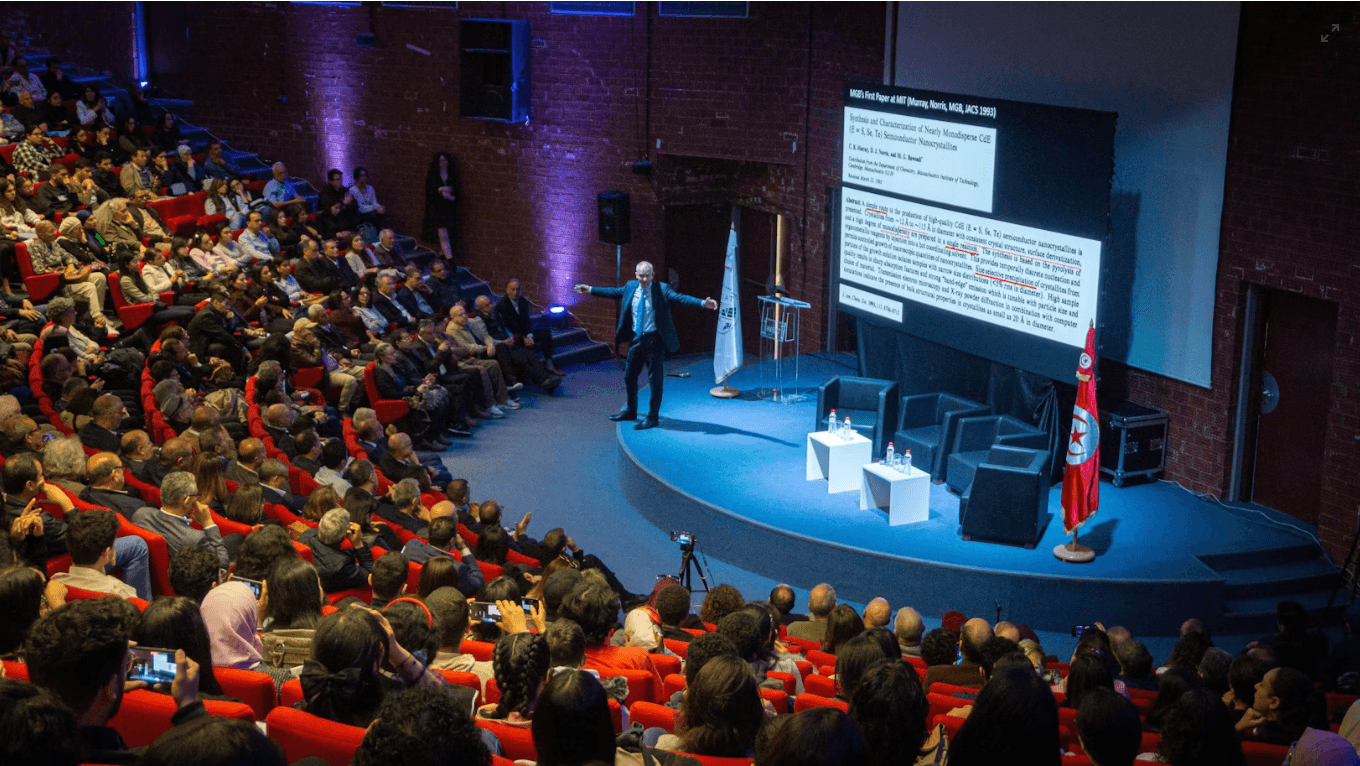
Beyond Event Coverage: How Africa's Biggest Conferences Become Stories That Travel
As Africa’s major conferences grow in scale and influence, photography, film and real-time storytelling are changing how their biggest moments reach the world.
Read Insight Photography
How to Choose the Best Photography Company in Rwanda
Looking for a professional photography company in Rwanda? Choosing the right team goes beyond cameras and price. From documentary storytelling and conference photography to field experience, reliability, image quality and fast delivery, here is what organizations, businesses, NGOs and international partners should consider before hiring a photographer in Rwanda.
Read Insight